Creating our own landmarks: analog photo session with Ann
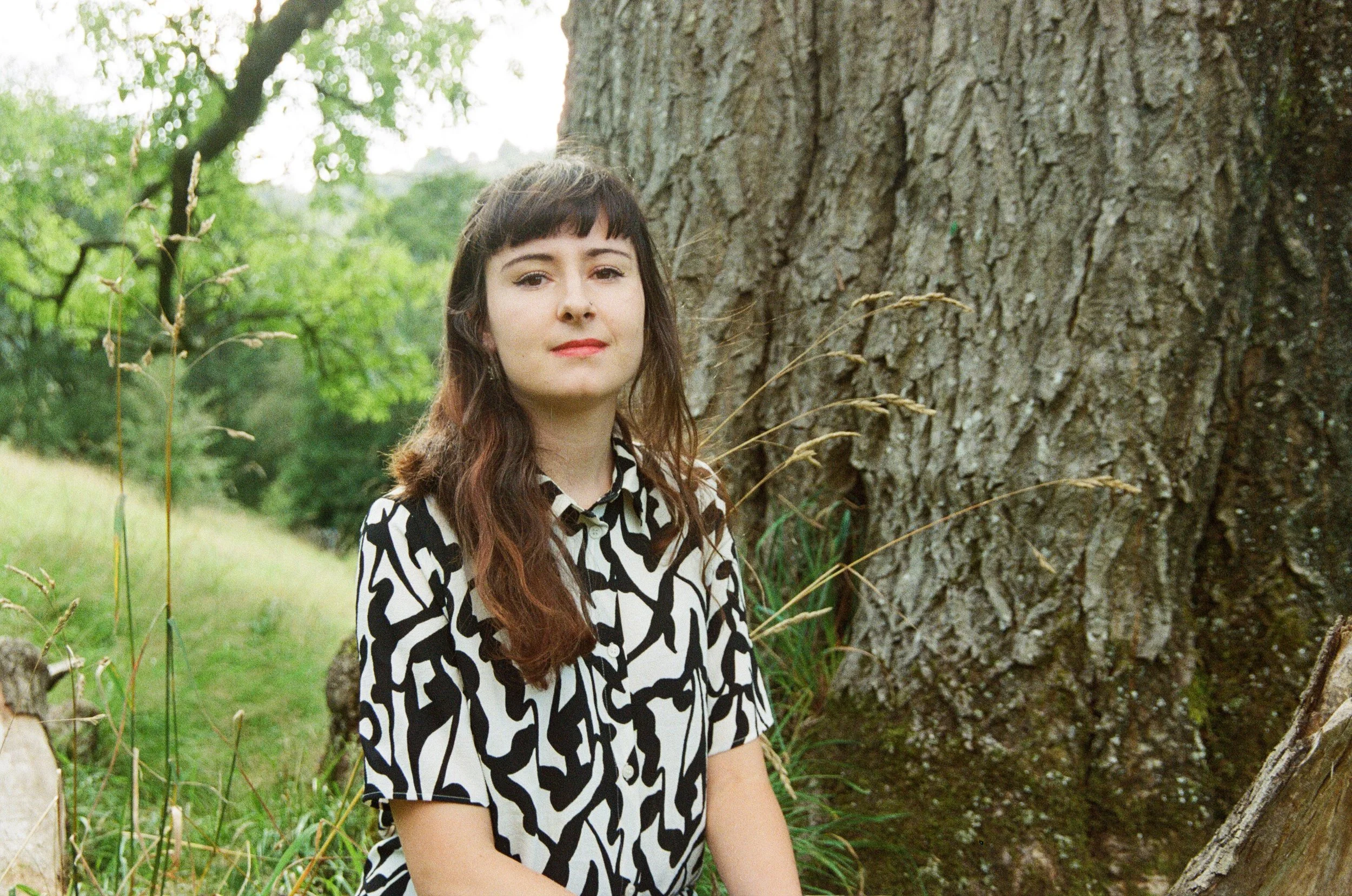
I decided to take Ann on what my family (and perhaps we’re not alone) calls “the ropeswing walk,” through Callis Wood. Choosing to go the gentler way round, we walked through town from the train station, along the canal path and up into the meadow where there’s a big, beautiful ash (I thought Horsehold Road’s steepness could be best enjoyed in descent that day!) There is still a rope hanging down from one of the tree’s limbs but there’s nothing to sit on at the end of it anymore. I suppose that could change again at any point. There have probably been many ropes of different colours over the years, many brave climbers and knot tiers.
I remember a family friend hanging off the swing with the backs of his knees and all the coins from his upside-down pockets falling around him into the grass.
I like the fact that place names, whether official or colloquial, hold memories: they can reveal things from the past. I have yet to read it, but I know from an inspiring talk he gave on one of Plantlife’s Virtual Members’ Days, that in writing The Lost Rainforests of Britain, Guy Shrubsole used this as a starting point for mapping out our precious temperate rainforests, whether ghostly or still thriving.
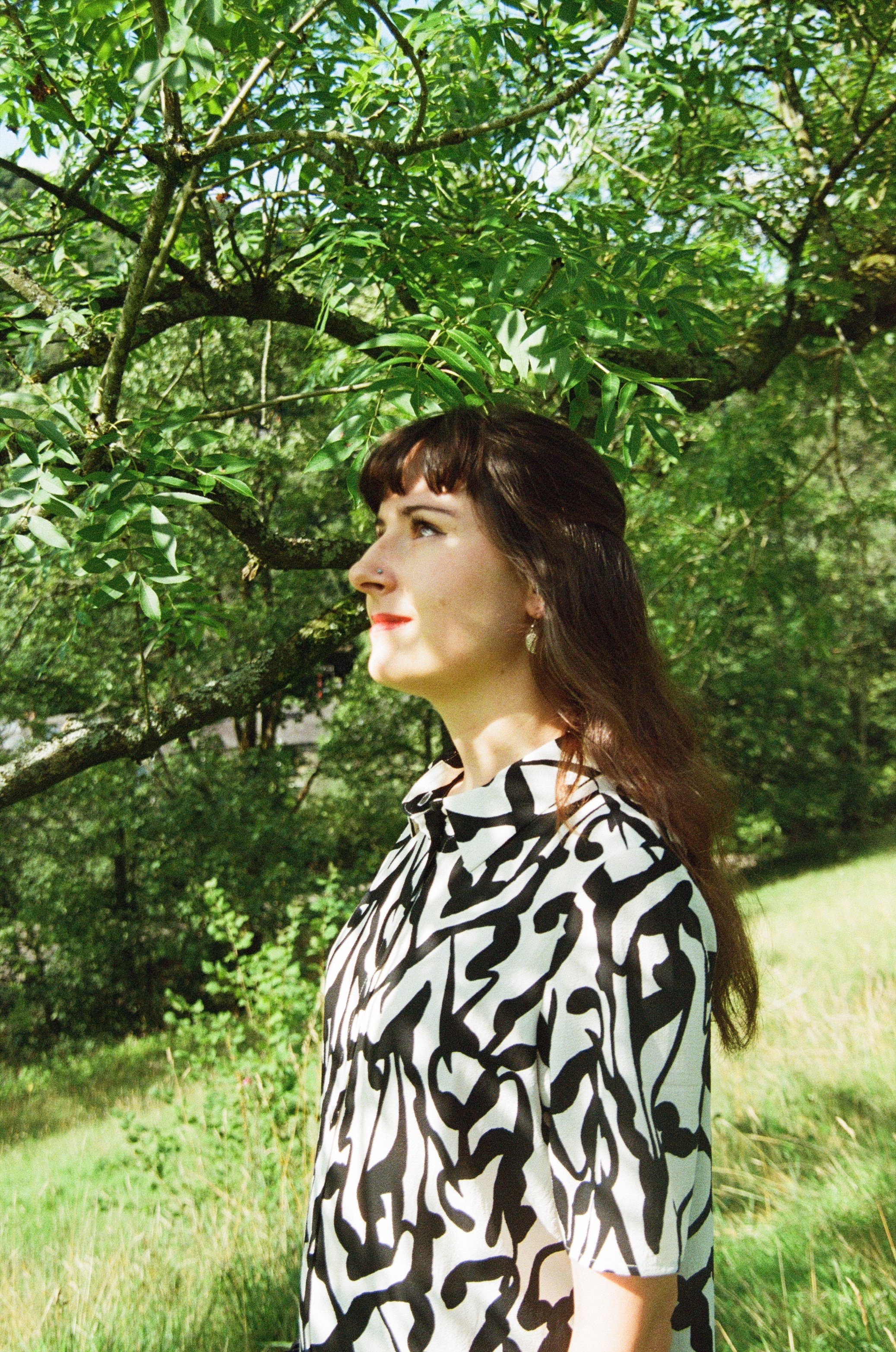
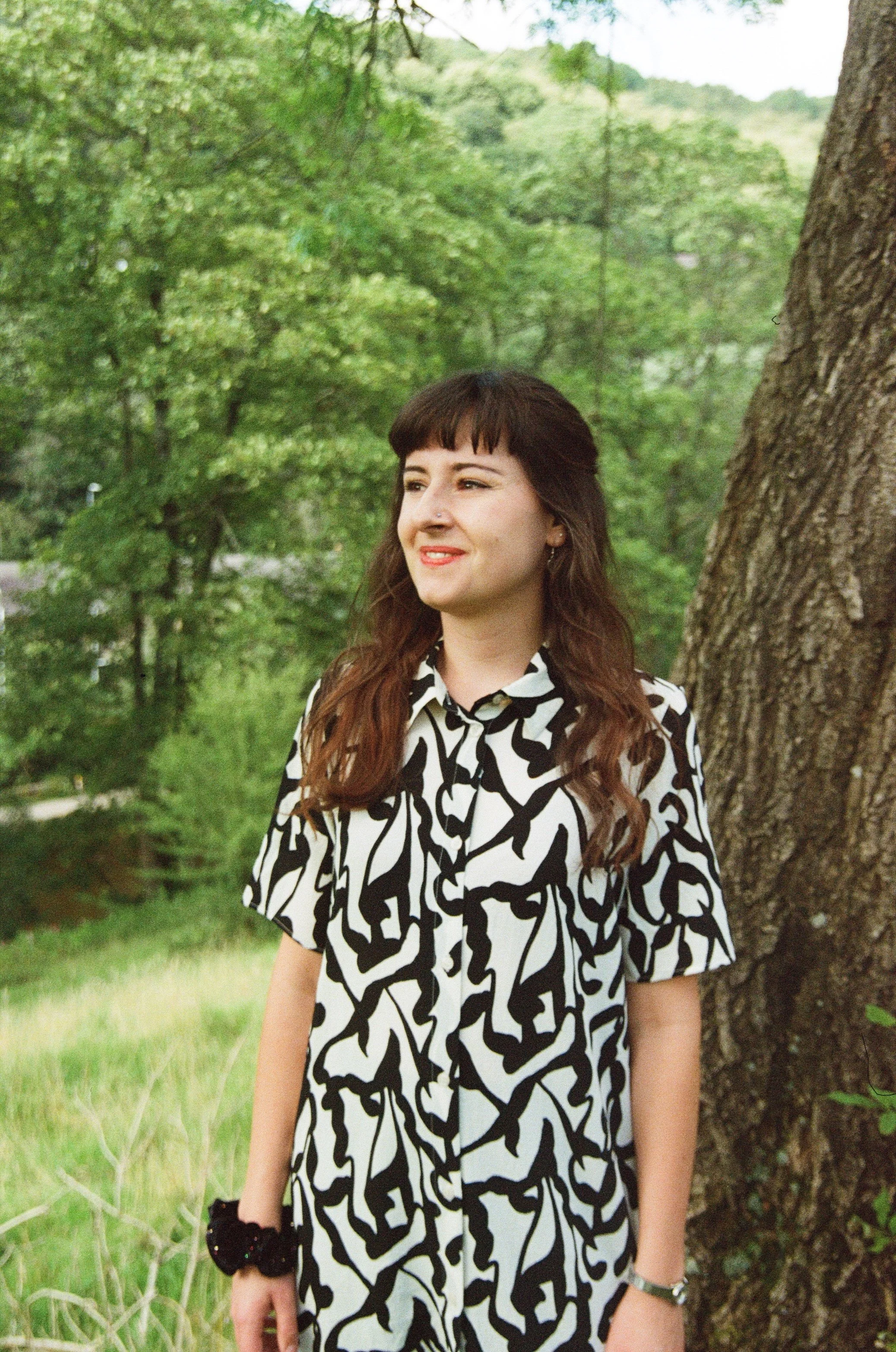
It delighted me that Ann was wearing this patterned dress, which mirrored the bark of the ash so beautifully as well as the shadows that fall through the leaves.
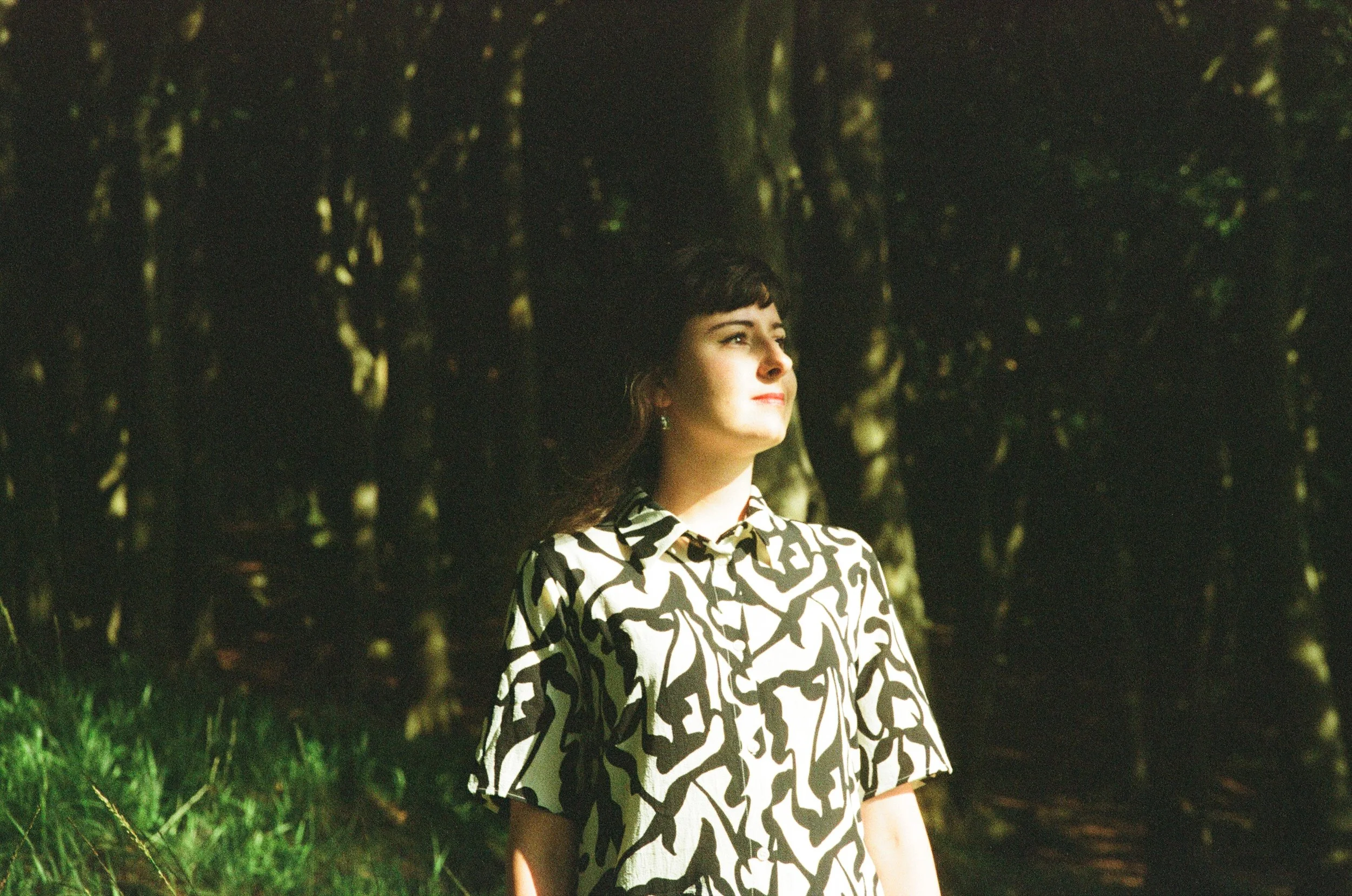
We postponed this shoot twice because it was so rainy, but when the time came we were blessed with a sunny late afternoon. We kept standing with our faces to the light, closing our eyes, making the most of it.
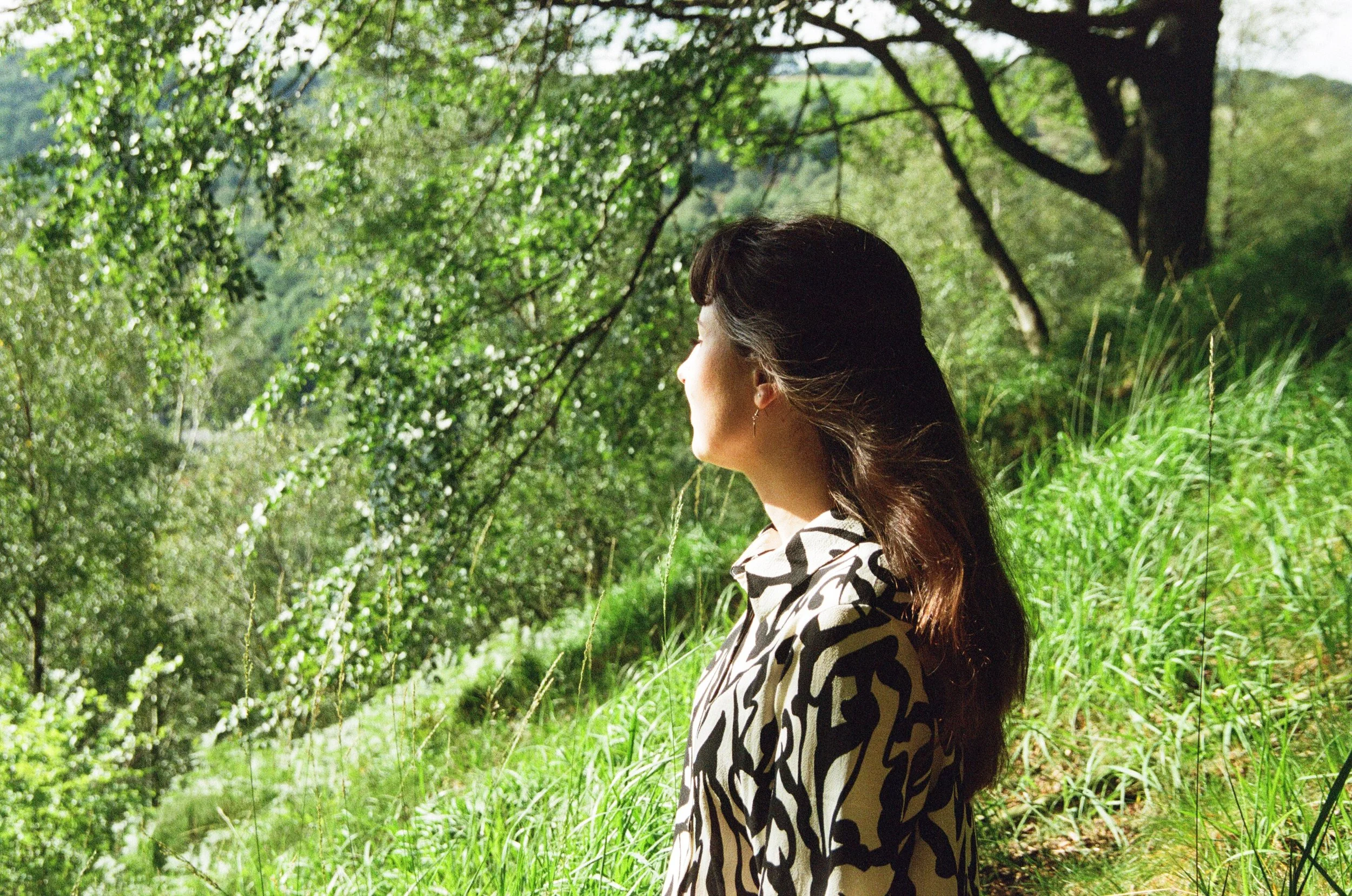
We were pretty giggly on this walk, I noticed myself being silly and enjoying it. Luckily I remembered to take photos and pay attention to shutter speed and aperture as well.
When replying to a post Cathy shared about our recent shoot, I was remarking on how the paths we took together will forever be imbued with the spirit of her and Floyd her dog; all the things we talked about and saw and heard. Also what was going on within us and between us at the time. I love creating maps of places with people in this way and being able to refer to the landmarks. There’s that spot where we laughed about hot tubs being, “nice when you sit in them” (🐚 and I’m like, compared to what!? 🐚).” That field we ate Woody’s pizza in one evening, The Cathedral (an old beech whose arms drape gracefully down, under which chanterelles and hedgehog mushrooms grow), The Peaceful Pond… I could keep going for a while!
It’s a recurring theme in Robert Macfarlane’s The Old Ways, which I recently enjoying reading. I learnt from this book that there’s a Spanish saying, “Caminar es atesorar!”: “to walk is to gather treasure!” and enjoyed these snippets:
“the mind was a landscape of a kind and walking a means of crossing it”
“paths connected real places but they also led outwards to metaphysics, backwards to history and inwards to the self”
“path as story, with each new walker adding a new note or plot-line to the way”
In The Wilderness Cure, Mo Wilde also talks beautifully about the processes of mental mapping we do, especially as foragers (or fishers):
“It’s curiously calming, fishing. My mind has time to wander but it doesn’t. It’s trying to map this new underwater world. As the lead weight on my line bounces off the bottom of the sea loch I am gaining a sense of its geography. ‘Nick,’ I say, turning to my fellow fisherman. ‘You’ve fished a lot. In the places you know very well, do you have a mental map in your head of the bottom of the sea?’
He immediately knows what I mean and nods. ‘I do. And during low tide I walk around and look at the gullies and pools, see where the seaweed grows, note where it’s deep and where there are rocks or channels. When the tide is in and I’m fishing, I remember all these places.’
‘It’s the same with mushrooms,’ I reply. ‘I have a mental map where all the fungi mycelium is in the forest. I can see in my head how large it spreads around each of the tree sand I. know where the mushrooms are likely to come up. It’s like the layers in an architect’s drawing. You can switch them on or off and see below the surface of the soil.’”
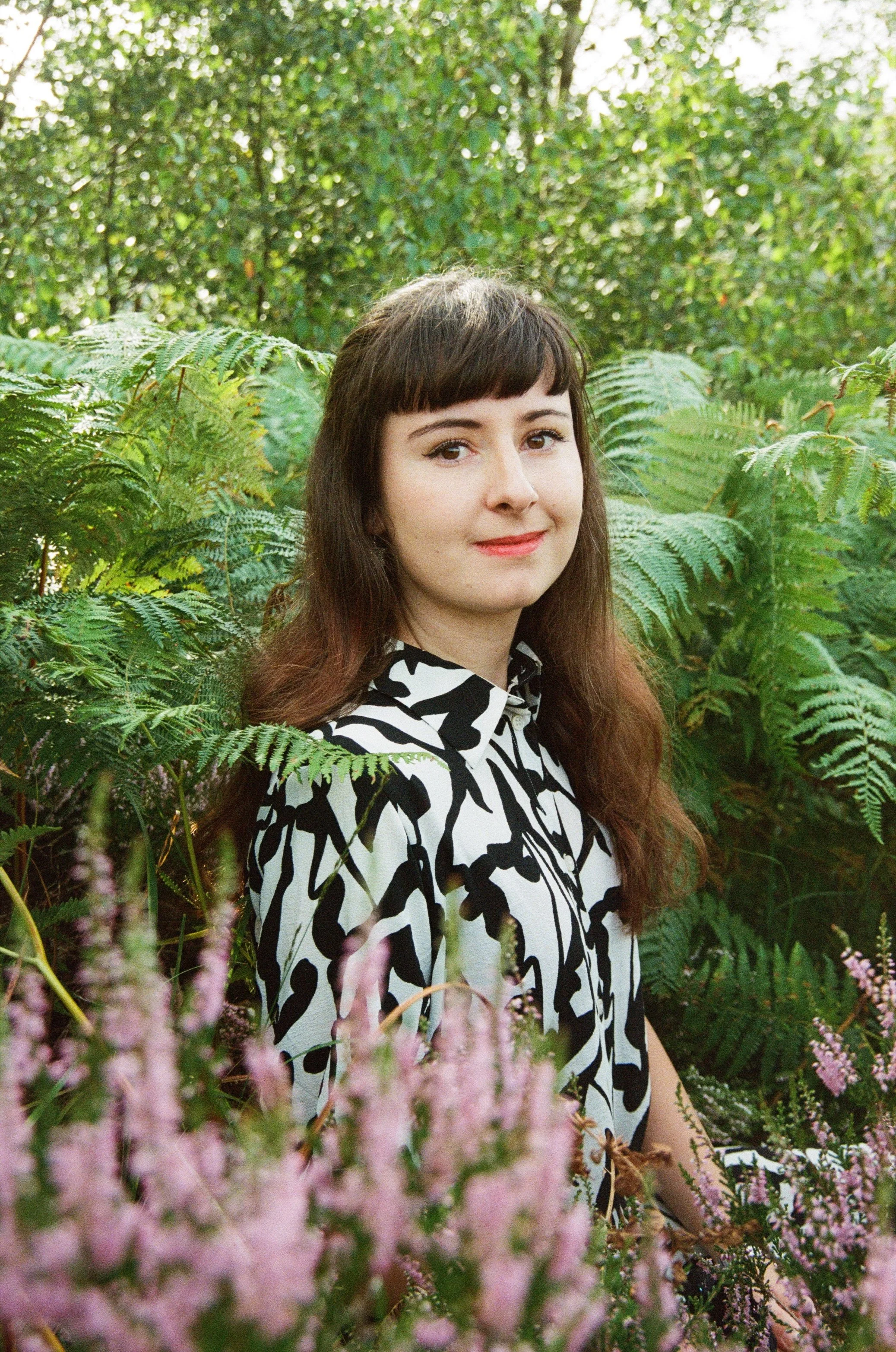
The pink-purple of the newly-blooming heather really caught my eye when we emerged from the woods. I asked Ann to step into the ferns and crouch, “there, where that Echo Falls wine bottle is!”.
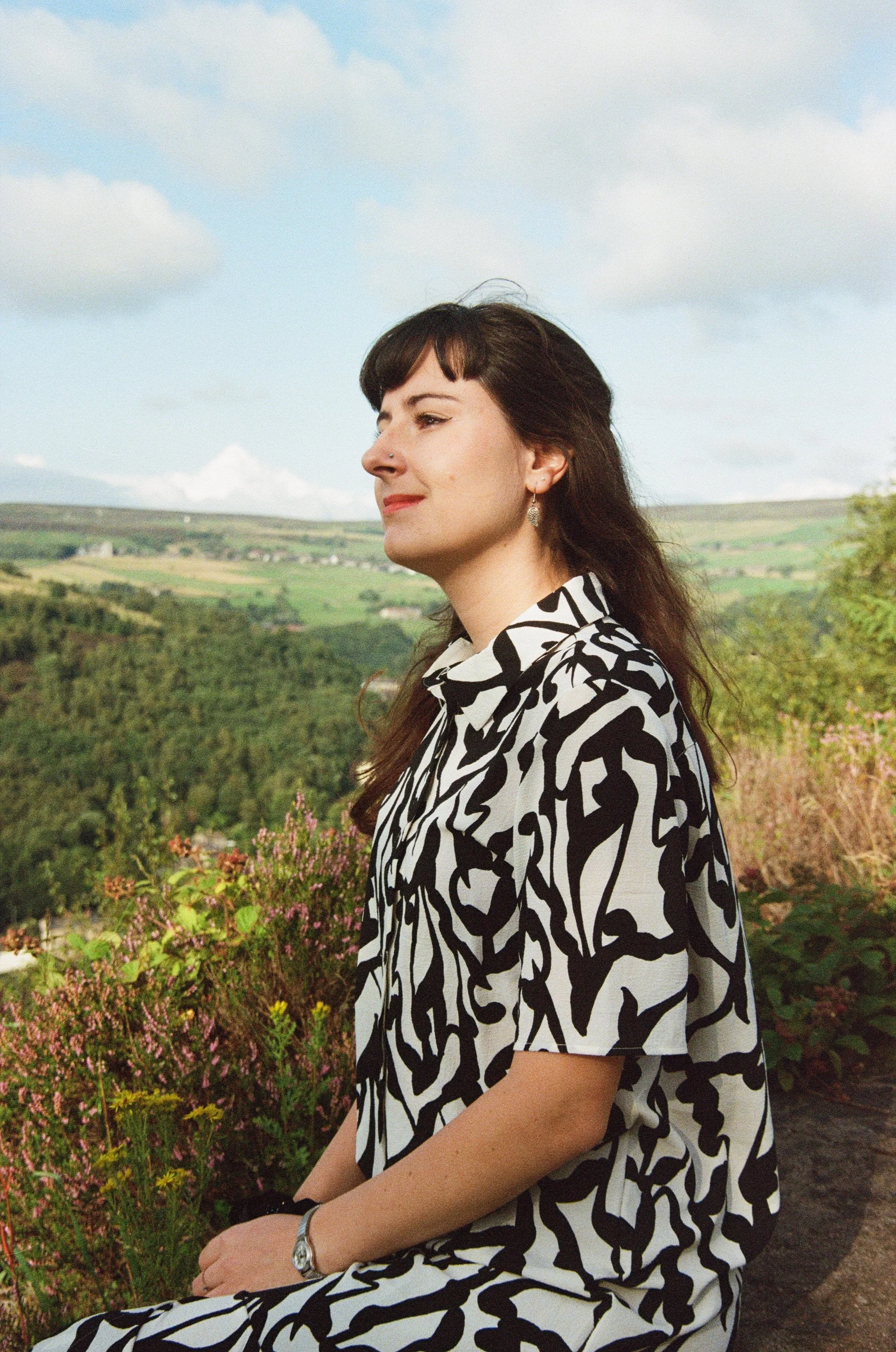
Thanks Ann for a gorgeous afternoon and your warm presence.
Technical Details
Camera: Canon EOS 1000F
a present from my aunt & uncle, my trusty companion for years already
Lens: Tamron SP 34-135mm, F/3.5-5.6, aspherical zoom
Film: Kodak Porta 800 35mm, 36 exp.
Dev & Scan: Take It Easy Lab, Leeds (use this referral link for 20% off their services)
Interested in an analog photo session? The free slots I opened up have been booked now, but I have decided to offer some at a reduced, introductory rate. Find out more here or send me an email or Instagram DM with any queries.